Engineering Beyond Agile
Your system ships while you sleep. But who owns the choices that were never consciously made?
Agentile is the operating model for teams where AI accelerates every decision. Lean, platform-enabled, and built around the ISEE framework—so speed runs inside structure, not around it.
The Thesis
Agile assumed all work is done by humans. That assumption no longer holds.
By Suzanne Daniels—engineering leader, creator of the Agentile operating model and the ISEE framework.
The Decision-Speed Gap
Delivery now moves at machine speed. Decision-making still moves at human speed. The gap between the two is where quality goes to die — and where most organisations are bleeding without realising it.
Decisions Nobody Made
A rollback threshold nobody set. A dependency bump nobody approved. When speed outruns structure, decisions get made by default — by whoever is closest to the keyboard. Or by an agent at 2am that doesn't know to ask.
Teams as Cells, Not Stages
Agentile teams don't sit in a pipeline waiting for handoffs. They operate as locally accountable cells — partially informed, tightly coupled through shared decisions, and able to ship with full context.
The Platform as Decision Backbone
Platform engineering isn't DevOps plumbing anymore. It's where your organisational intent actually lives — where guardrails, policies, and values get enforced at machine speed, for humans and agents alike.
That's the condition Ghost Decisions was written to address.
The Framework
ISEE
Eight articles. One question: if humans can no longer be in every loop, what structure does speed need? The answer is four layers and two directions of flow.
Intent
What the organisation actually wants — expressed clearly enough for both people and agents to act on. When intent is ambiguous, everything downstream inherits the ambiguity.
Structure
The guardrails, constraints, and codified trade-offs that decisions run inside. Security as a path, not a review. Cost as a constraint, not a surprise. Structure is what makes speed survivable.
Execution
Humans and agents shipping together — cells, not stages. Each team carries a piece of intent, none holds the full picture, and coordination becomes distributed, not managed.
Evidence
Observable signals that flow back upstream. Not dashboards — feedback that actually changes the next decision. Evidence closes the loop and keeps the system honest.
ISEE Framework™ and Agentile™ are trademarks of Agentile. The framework is free to use and reference — just not to imply certification or endorsement. Terms.
The Book
Ghost Decisions
The full ISEE model — all four layers, the diagnostic, and the measurement architecture. 296 pages.
Agentile at Events
Bring these ideas to your event
Available as a session or keynote for conferences, leadership offsites, and engineering teams.
The 10-Part Series
Engineering Beyond Agile
From the first article naming Agentile to the ISEE framework that makes it real. Each piece builds on the last—start at Part 1 or jump to what matters most.
 SubstackPart 10
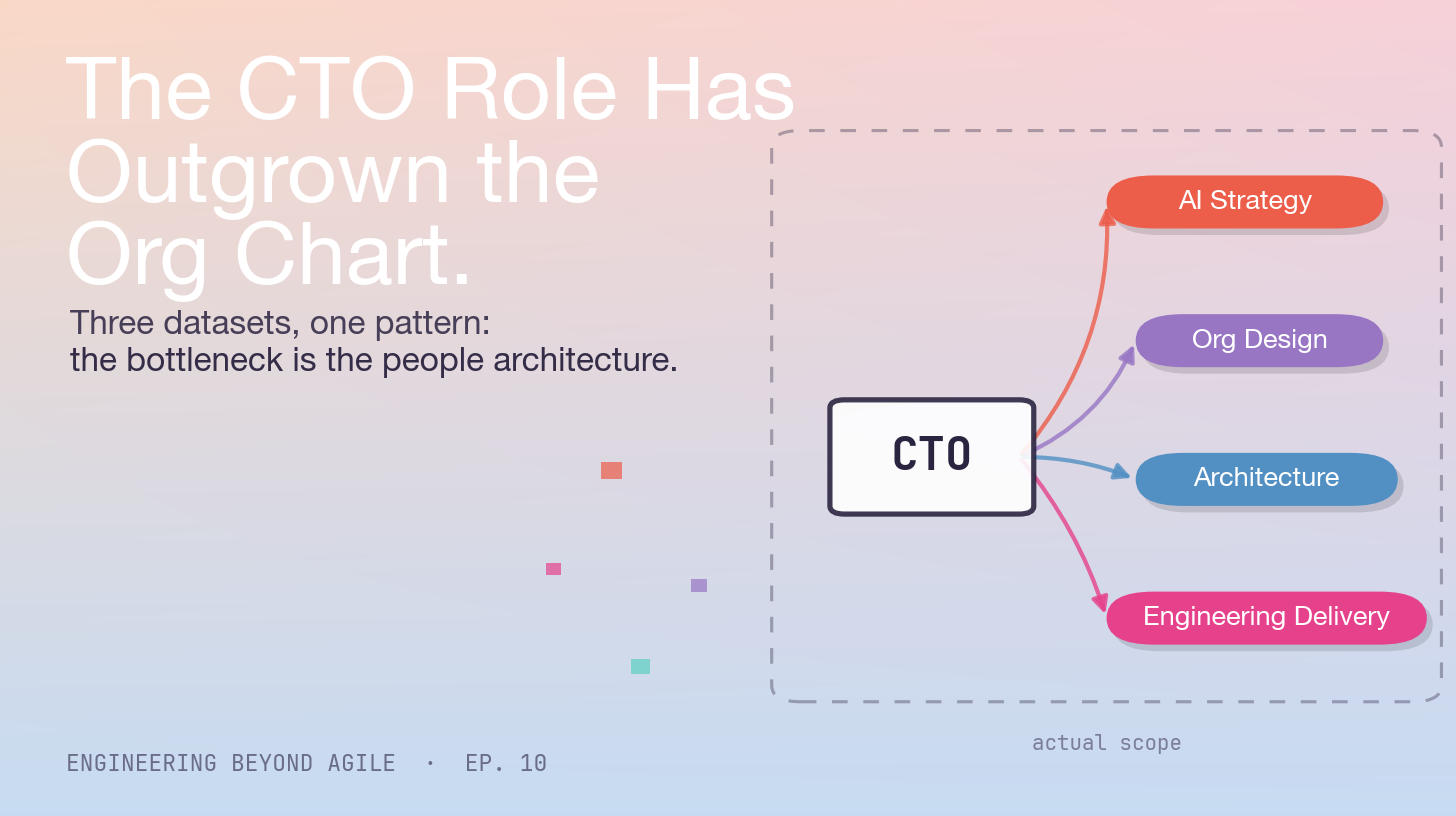
Engineering Beyond Agile: The CTO Role Has Outgrown the Org Chart
Three datasets, one pattern: the bottleneck is the people architecture.
 SubstackPart 9
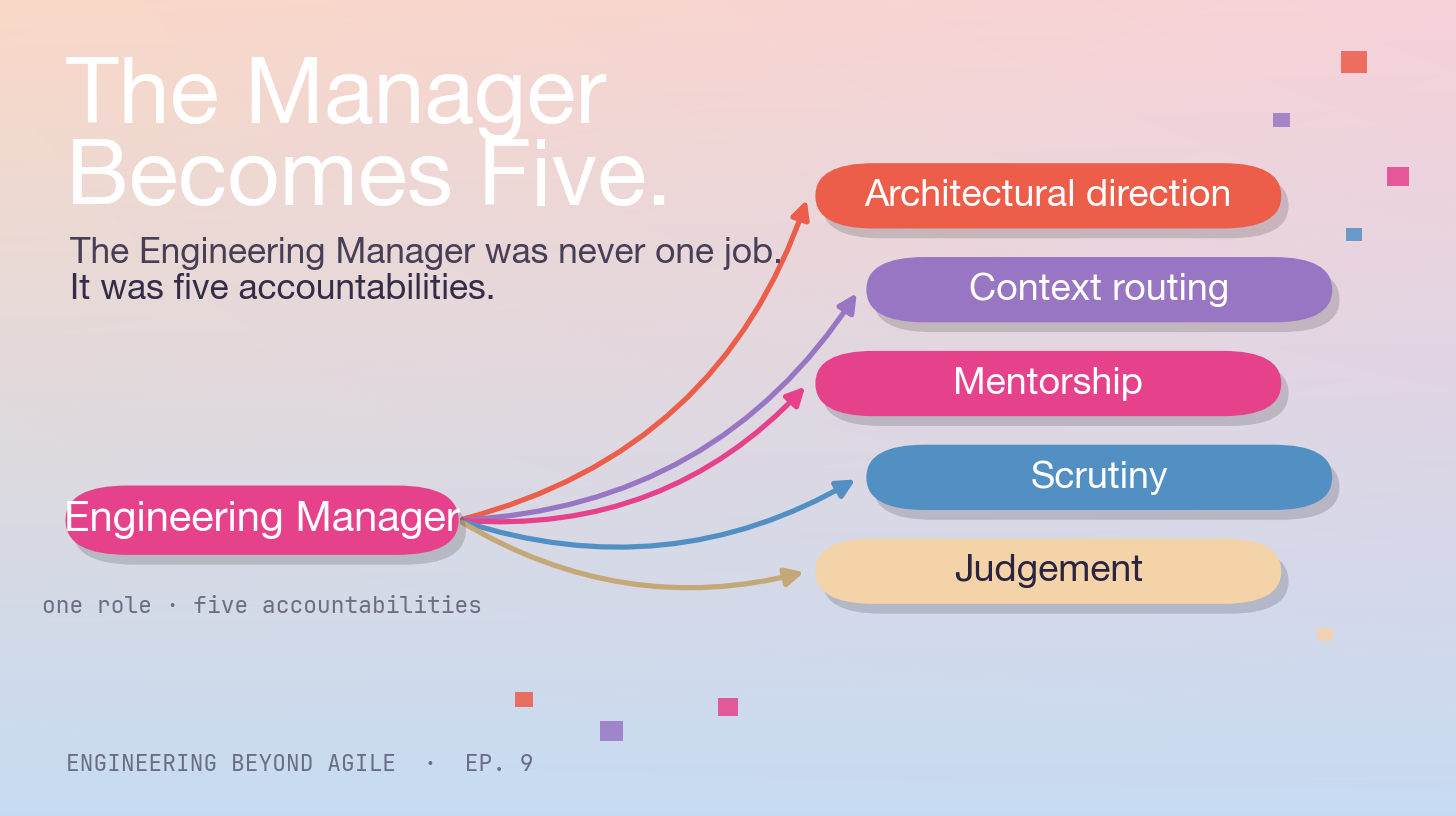
Engineering Beyond Agile: No More Middle-Management? The Manager Becomes Five
The Engineering Manager was never one job — it was five accountabilities. Remove the role without naming where each one lands, and you orphan the work.
 SubstackPart 8
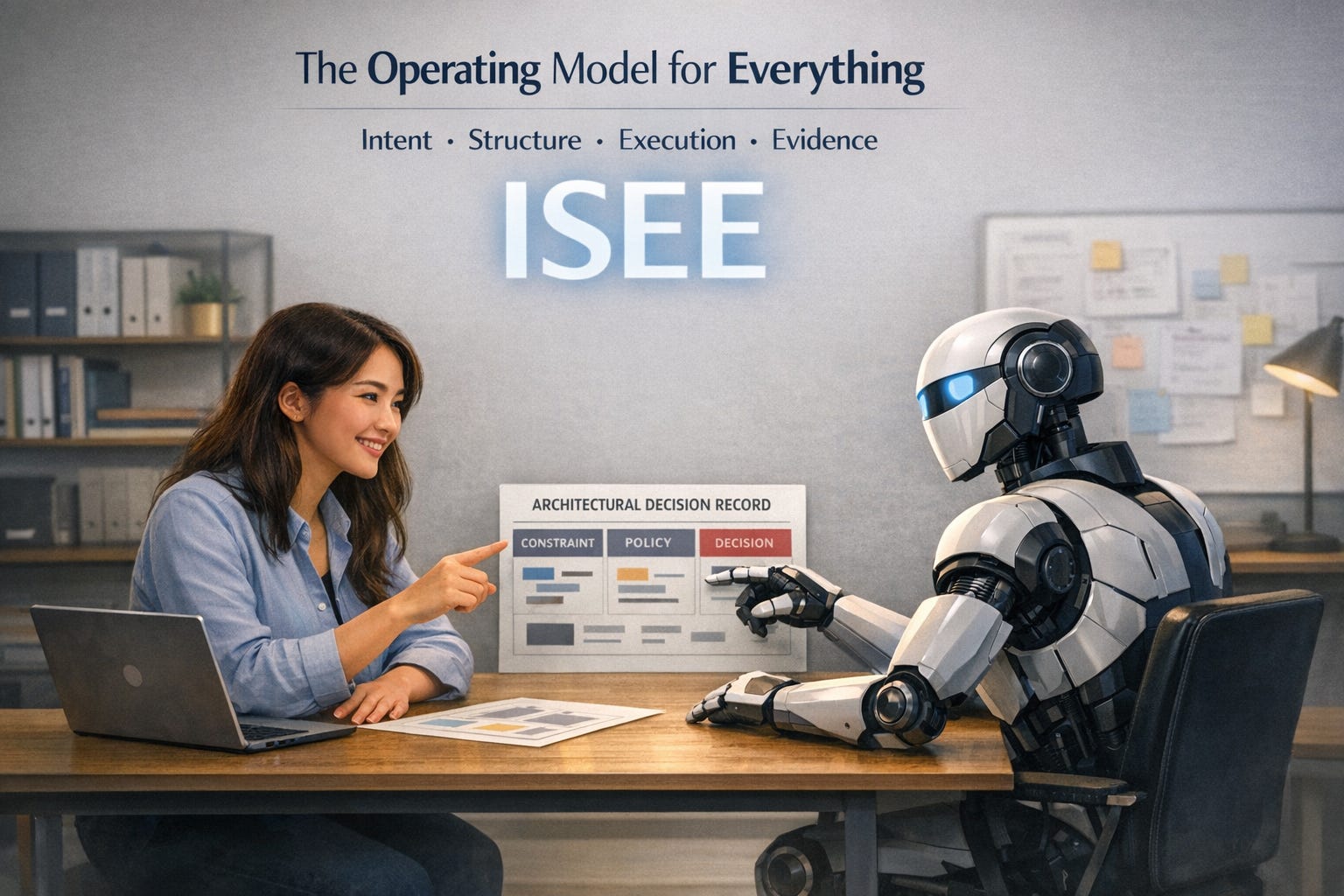
Engineering Beyond Agile: Speed With a Spine
Introducing the ISEE Framework
 Substack
Podcast: Beyond Coding
A sit-down, brutally honest, conversation about modern software engineering
 SubstackPart 7
Engineering Beyond Agile: Human Judgment in a System That Never Slows Down
The System That Decides While You Sleep
 Substack
Platform Engineering Lessons from an AI Detective Game
From “Adult in the Room” to Autonomous Agents
 SubstackPart 6
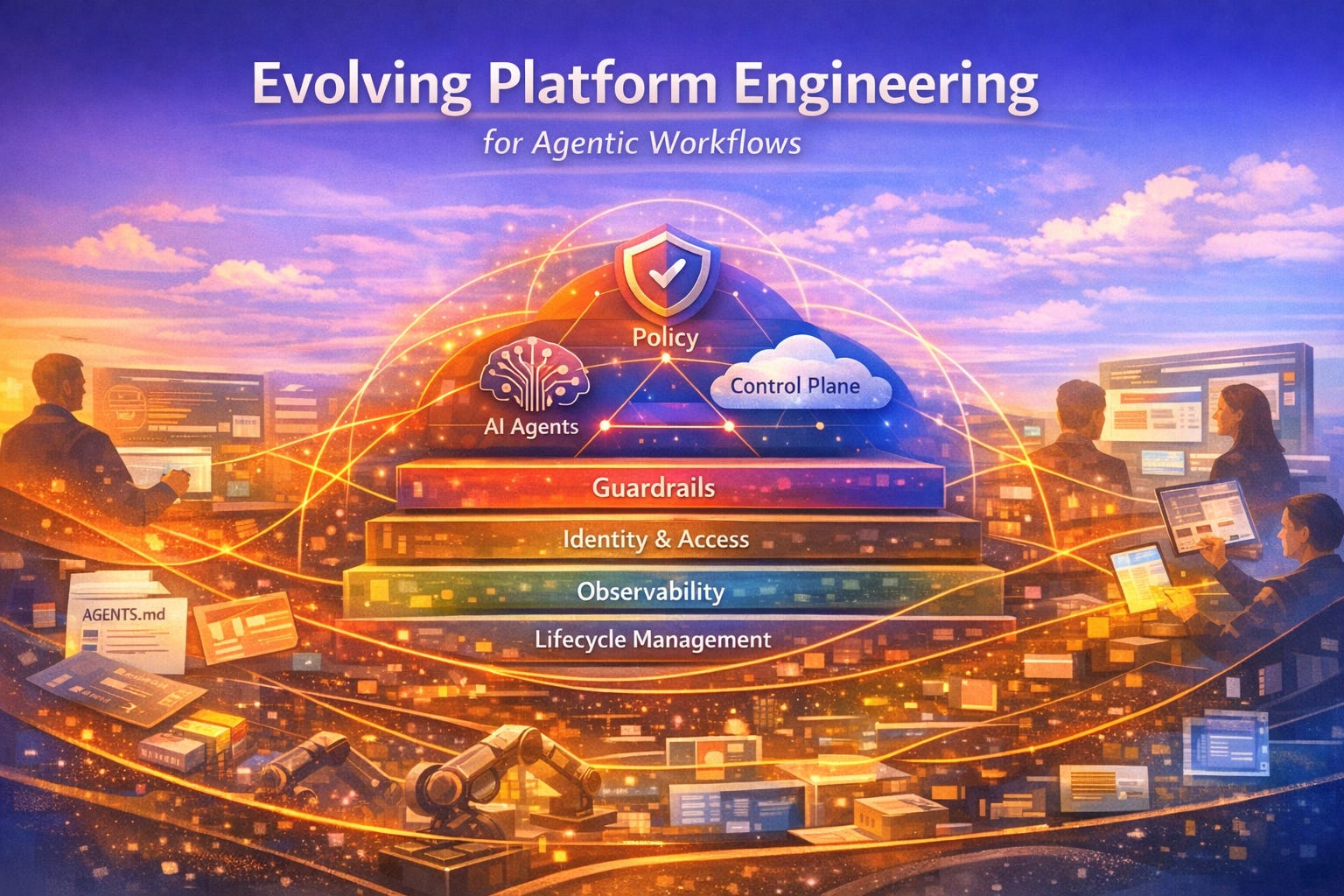
Engineering Beyond Agile: The Platform Becomes the Adult in the Room
How the Agentile organisation impacts Platform Engineering
 SubstackPart 5
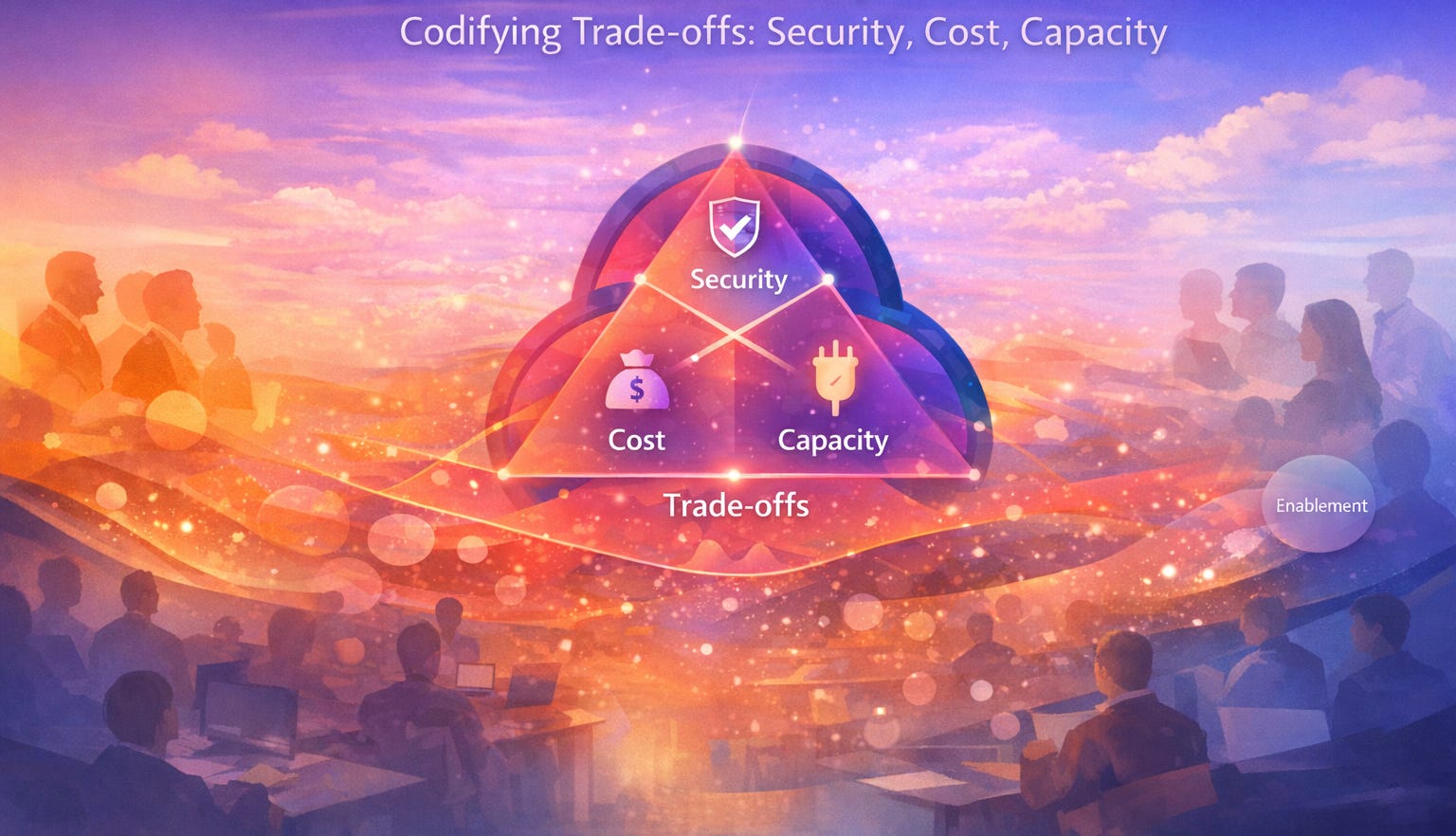
Engineering Beyond Agile: Codifying Trade‑offs
Security, Cost, and Capacity in Agentile Teams
 SubstackPart 4
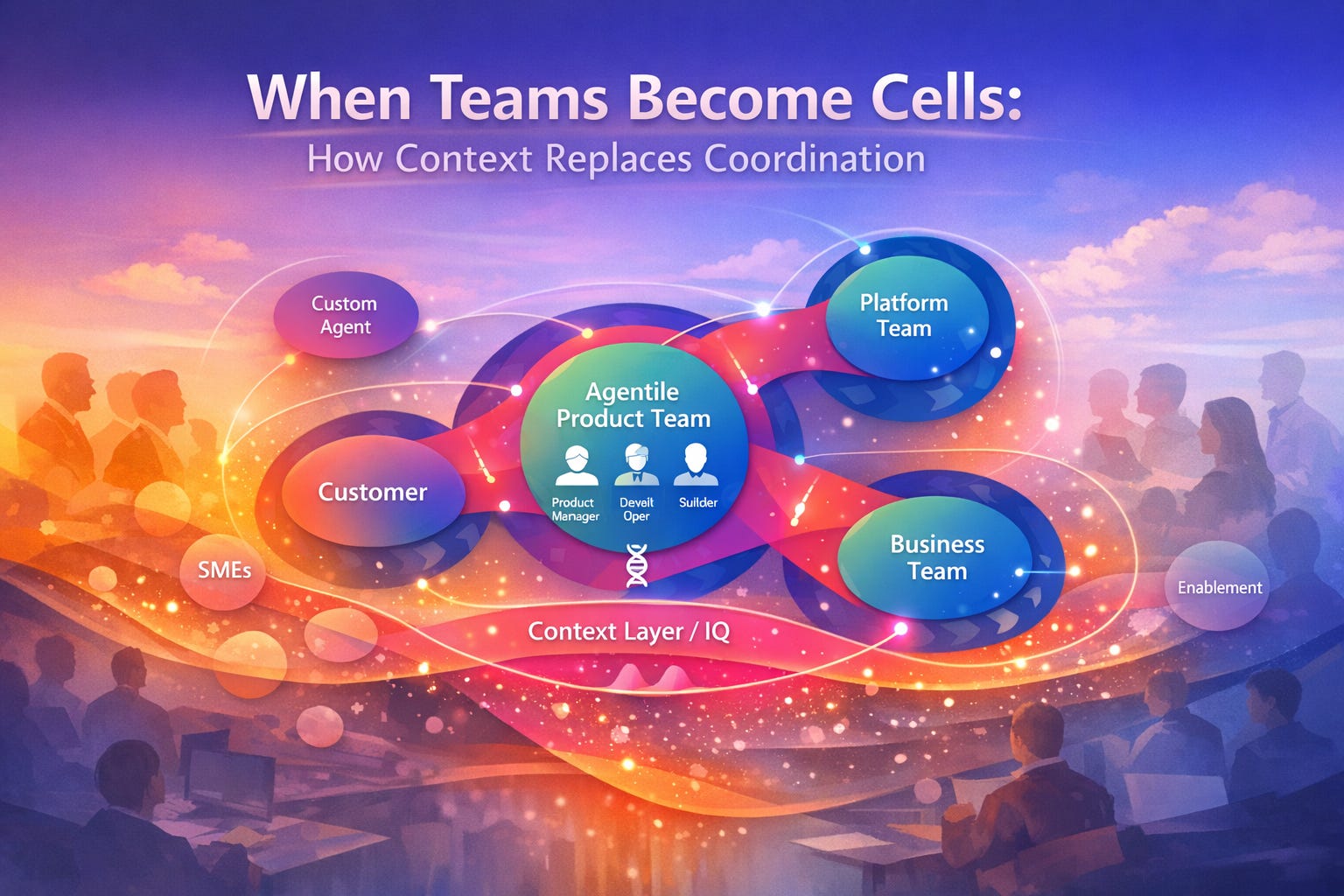
Engineering Beyond Agile: When teams become cells
How Context Replaces Coordination
 SubstackPart 3
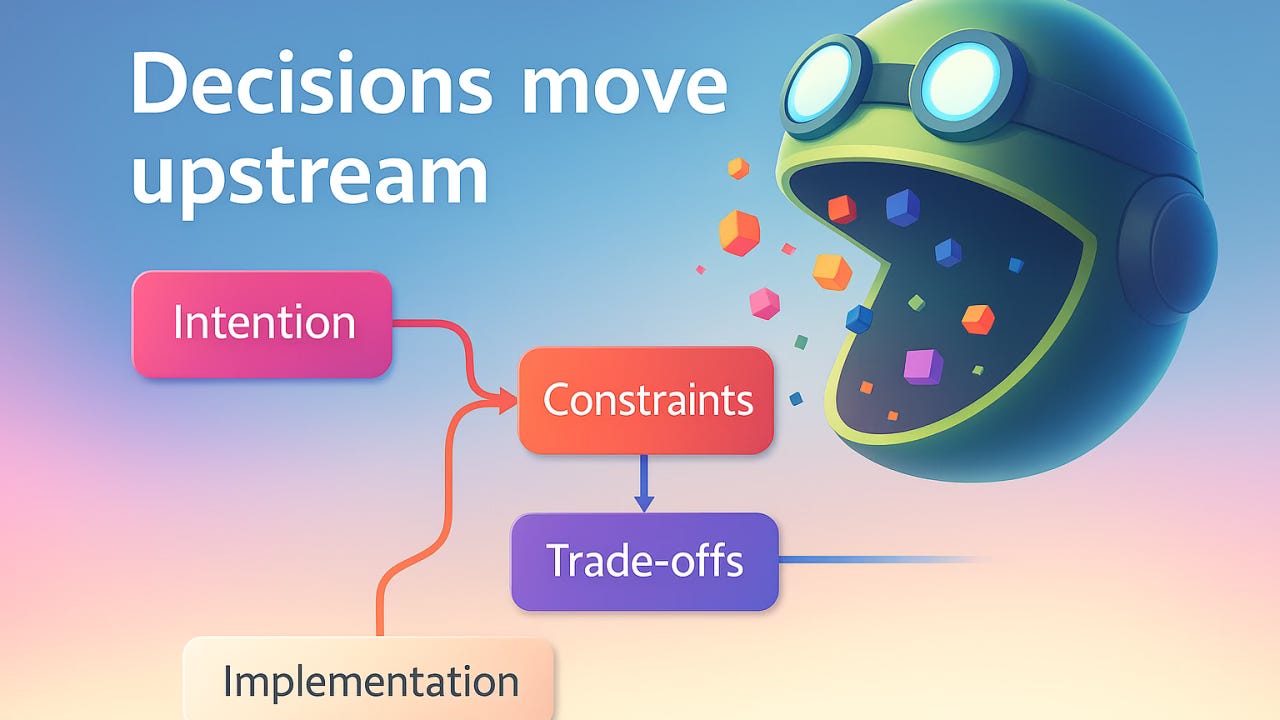
Engineering Beyond Agile: When Decisions Move Upstream
Decisions, unlike code, are social. They carry intent, trade‑offs, and power.
 SubstackPart 2
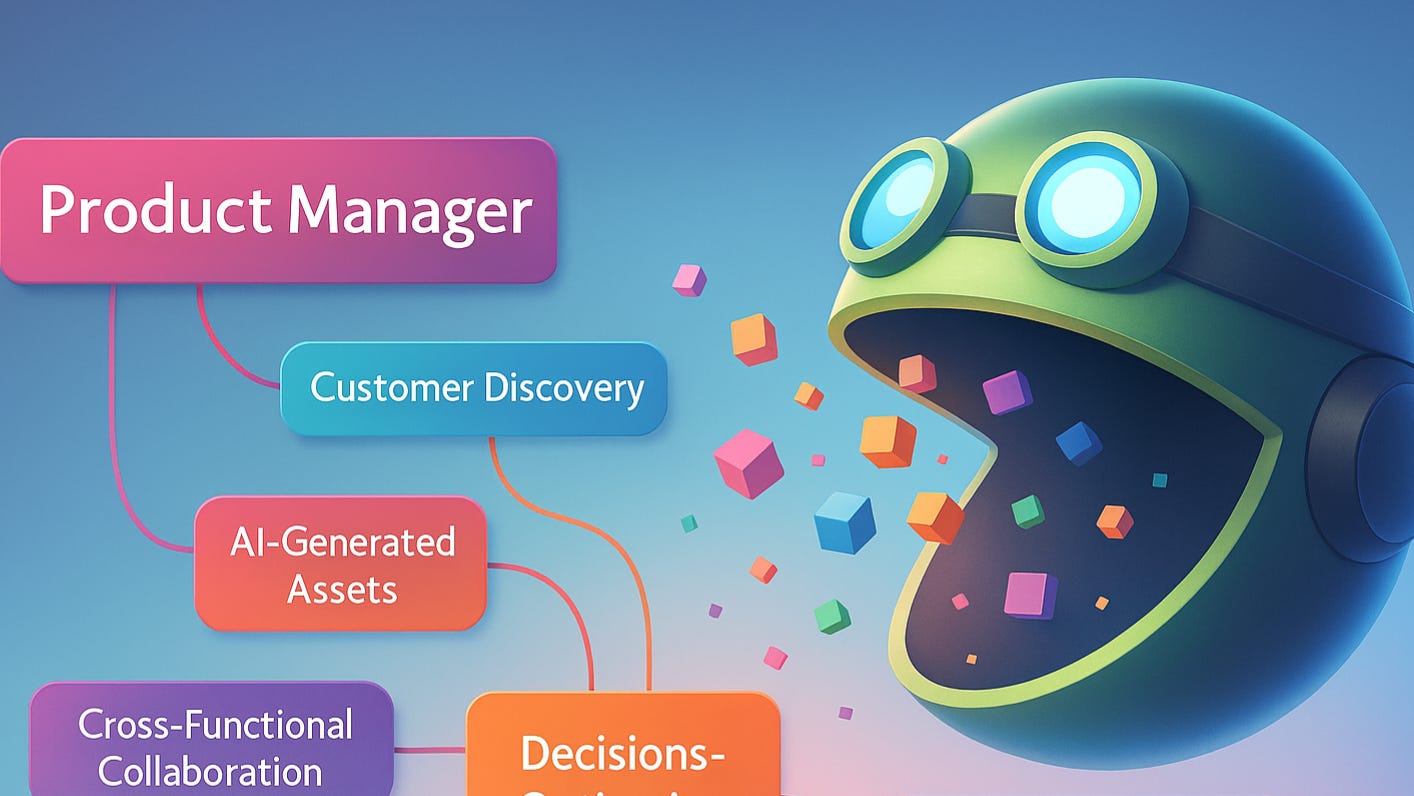
Engineering Beyond Agile: Do we still need a PM in the Agentile Team?
Will the PM Job be "eaten for breakfast" by AI?
 SubstackStart Here
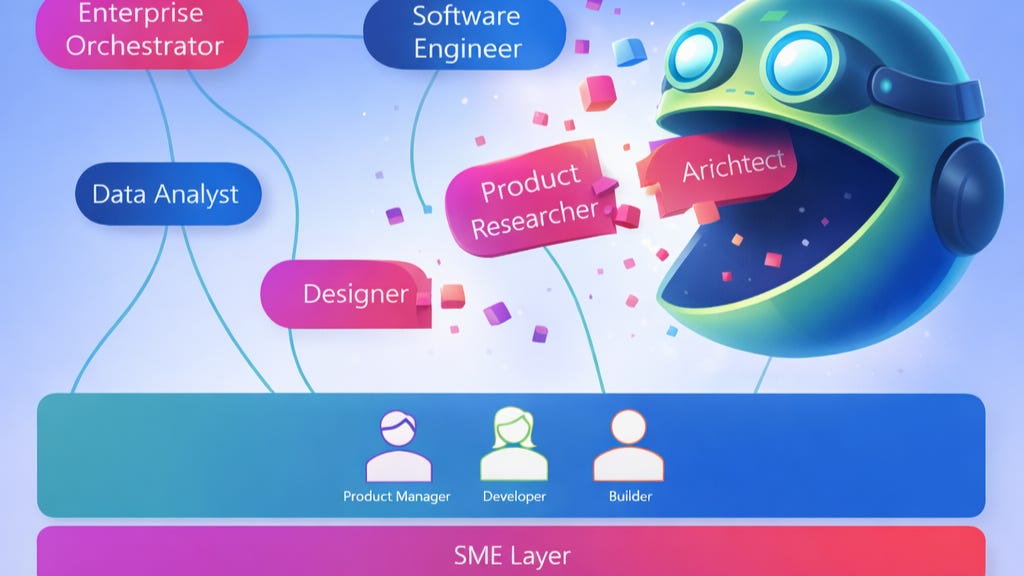
Engineering Beyond Agile: AI and the Rise of Agentile teams
AI maturity is forcing a structural rethink of engineering organizations
 Substack
Coming soon
This is Engineering Beyond Agile - Suzanne Daniels.